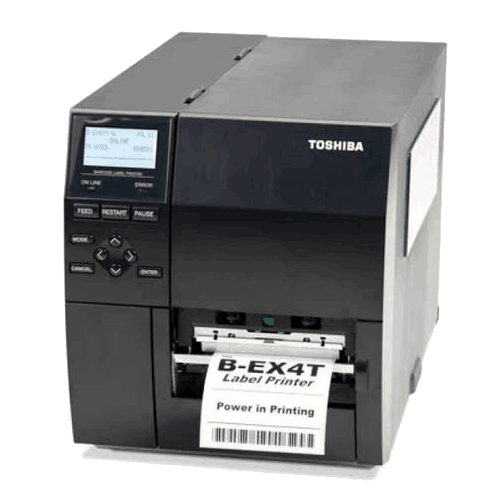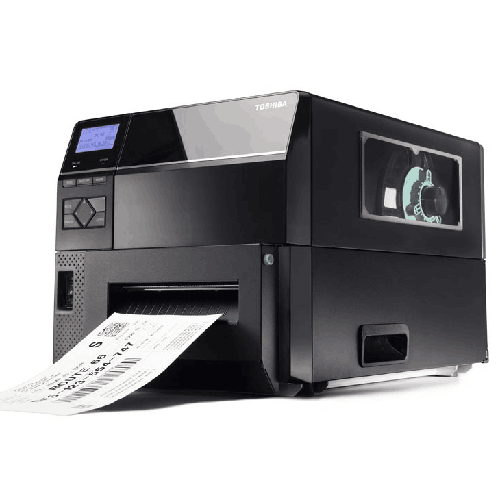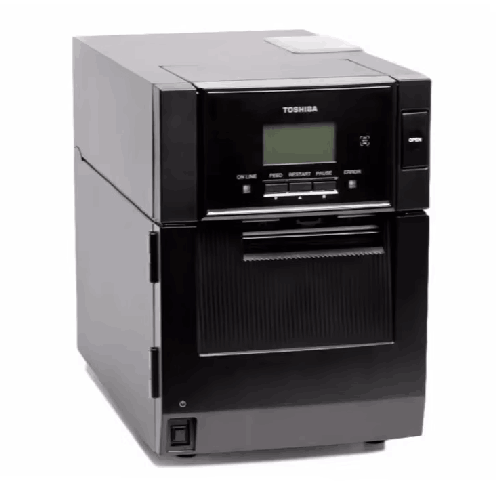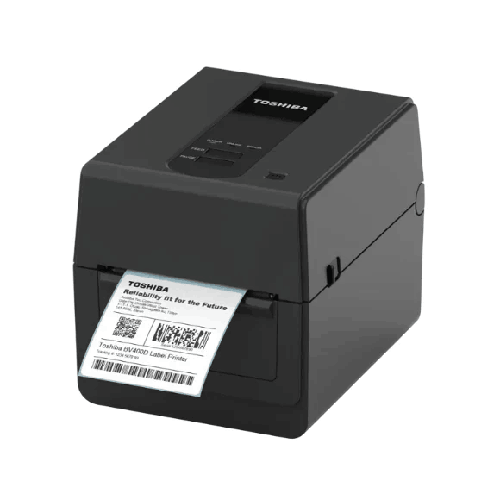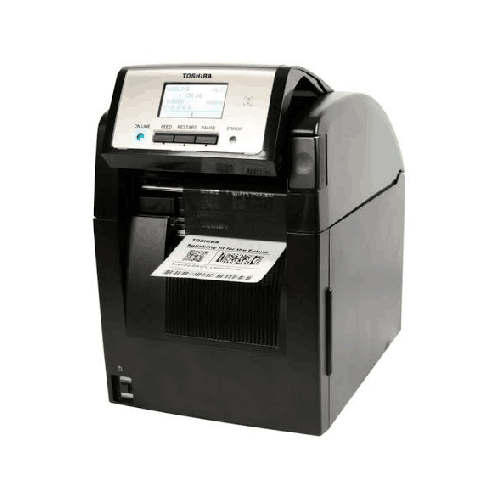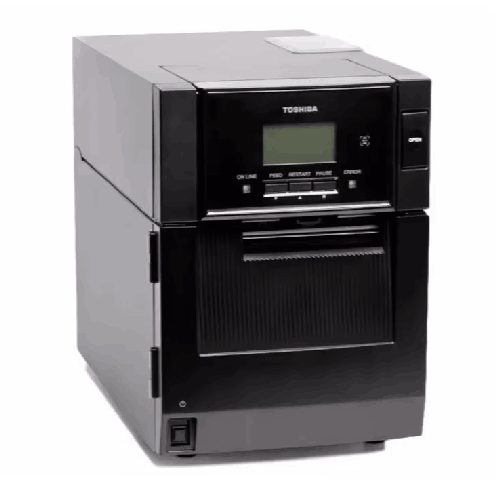
Toshiba BA410T High Quality Industrial Label Printers
Regular Price:৳0.00Availability: SKU: 1.6.2.9193
Quick Overview
-
Support
Saturday – Thursday: 09 AM - 06 PM. -
Payment
Cash on Delivery | Card | Online Payment -
Shipping Cost
Inside Dhaka 100tk | Outside Dhaka 150tk -
Warranty Policy
Read More
Description
Toshiba BA410T High Quality Industrial Label Printers in Bangladesh
The Toshiba BA410T High Quality Industrial Label Printer is designed for organizations that need dependable, professional barcode and label printing every day—without stepping into oversized, overly complex systems. It’s positioned as an industrial-grade solution with a practical daily output rating, operator-friendly controls, and the flexibility to print both long-lasting labels and quick, short-term labels depending on the job.
With support for Thermal transfer and Direct thermal printing, the Toshiba BA410T can fit a wide variety of Bangladeshi use cases—from durable product labels used in manufacturing and distribution to fast shipping labels used in logistics and eCommerce fulfillment. Add a flat head printhead type (often chosen for reliable general-purpose performance), and you get a printer built to deliver consistent results in real working conditions.
A printer that matches Bangladesh’s “daily volume” reality
Not every business in Bangladesh needs an extreme-duty printer designed for the highest possible output. Many operations print labels continuously throughout the day, but within a realistic industrial workload. The Toshiba BA410T is rated with a duty cycle of 5,000 labels/day, making it a strong fit for:
- Mid-to-large warehouses that print bin, shelf, carton, and dispatch labels
- Manufacturing lines that print product labels, batch labels, and packaging labels
- Retail distribution centers that need steady barcode labeling
- Service and parts businesses labeling items and inventory locations
- Offices managing assets and equipment tagging
That 5,000 labels/day duty cycle is a practical sweet spot: high enough to handle busy working days, but not so overbuilt that you pay for capacity you never use. For many Bangladeshi organizations scaling their operations, it’s exactly the kind of “industrial without being excessive” investment that makes sense.
Thermal transfer vs direct thermal—choose label durability based on the job
The Toshiba BA410T supports both major thermal printing methods:
Thermal transfer printing is commonly selected when labels must remain readable for longer periods and survive handling, rubbing, heat, or storage. This is a typical requirement for manufacturing inventory, distribution labels, product identification, and warehouse tracking where labels might be scanned many times.
Direct thermal printing is widely used for labels with a short lifespan—like temporary shipping labels, short-term internal movement labels, or quick-use tags—where simplicity and speed are key.
In Bangladesh, many businesses use both methods in the same facility. For example, a warehouse may use thermal transfer for rack and bin labels (long life), while using direct thermal for day-to-day dispatch labels. The BA410T’s dual capability helps you run these workflows on one industrial printer platform.
Flat head printhead—built for consistent, everyday clarity
The flat head thermal print head type is a popular industrial standard. It’s generally valued for stable output and suitability for a wide range of label materials used in routine barcode printing. In daily work, that translates to clearer text, stable barcode edges, and fewer “why is today’s print darker/lighter than yesterday?” headaches—especially when multiple operators share one printer across shifts.
If your operation depends on scanning—at receiving counters, during picking, at dispatch gates, or in retail back rooms—print consistency is not a cosmetic detail. It’s an operational necessity.
Memory designed for stable job handling
The Toshiba BA410T includes 128 MB (FROM) and 128 MB (SRAM). In practical terms, healthy onboard memory supports smoother printing operations, especially when printing repeated templates, handling batch jobs, and running longer print sessions without interruption.
For Bangladeshi businesses that print in batches—such as printing a few thousand carton labels before a shipment—stable processing can reduce job delays and keep operators focused on packing and dispatch rather than troubleshooting.
Operator-friendly interface for busy teams
A printer that requires an expert operator becomes a bottleneck. The Toshiba BA410T aims to be approachable for day-to-day users while still offering industrial capability. It includes:
- LCD screen (graphic 128 x 64 dots) for readable menus and status
- 2x LED indicators for quick visual feedback
- 3x key control with dedicated Feed, Restart, and Pause keys
These controls matter because label printing often happens in fast, repetitive cycles. Operators need to pause a batch, feed media after a roll change, restart quickly after correcting a label issue, and confirm printer status without digging into complicated software.
In environments like Dhaka’s distribution warehouses or factory floors in Gazipur and Narayanganj, that ease-of-use can be the difference between “printing is smooth” and “printing is a daily struggle.”
Top-opening media loading—practical for tighter workstations
The Toshiba BA410T uses top opening media loading, which can be convenient in setups where the printer is placed on a bench or workstation where side clearance is limited. In many Bangladeshi facilities, printing stations are built into packing tables, and top access can simplify roll changes without needing to reposition the printer.
Faster, simpler media loading reduces downtime. It also reduces the chance of improper loading—one of the most common causes of misaligned printing and label waste.
Physical build made for industrial placement
The printer’s dimensions are 245 x 414 x 333 mm, and it weighs 15 kg. This places it firmly in a sturdier class than lightweight desktop printers. A stable, heavier printer tends to stay in place, handle continuous operation better, and feel more “industrial” in daily use—important for shared workstations where equipment is frequently bumped or moved.
Built for Bangladesh temperature and humidity conditions
Bangladesh’s climate is a real factor for equipment reliability. Warehouses and production floors can be hot and humid, especially in summer or in non-air-conditioned spaces. Toshiba BA410T provides defined environmental operating ranges:
- Operating: 5°–40°C and 25–85% RH (non-condensing)
- Storage: -40°–60°C and 10–90% RH (non-condensing)
This is valuable information for businesses planning installation in environments that are not fully climate controlled. While no printer “likes” extreme dust or condensation, having a specified operating humidity range helps teams plan sensible placement—such as avoiding direct exposure to moisture, steam, or water sources.
Power supply that fits typical Bangladesh power environments
The Toshiba BA410T supports AC 100–240 V, 50/60 Hz, which aligns well with a wide range of power conditions and is practical for Bangladesh deployments. In many facilities, voltage stability can vary; using equipment that supports a broad input range can help reduce the risk of power-related issues. For best practice, businesses should still consider a quality UPS or voltage stabilizer where power fluctuation is common—especially in industrial areas.
Real-life usage scenarios in Bangladesh
To understand where the Toshiba BA410T shines, picture a few common scenarios:
1) Warehouse rack and bin labeling
A growing warehouse in Dhaka sets up systematic bin locations for faster picking. The BA410T prints durable thermal transfer labels for racks and bins. Clear barcodes speed up scanning and reduce picking mistakes.
2) Garments accessories and packaging labeling
A garments accessories supplier prints labels for cartons and inner packs. With steady daily output needs—not extreme, but continuous—the BA410T’s 5,000 labels/day duty cycle supports daily operations without overinvestment.
3) Pharma distribution and inventory control
A distributor prints product ID labels and carton labels for inventory movement. The ability to use thermal transfer labels helps maintain readability through handling and storage.
4) eCommerce and retail back-office operations
An eCommerce fulfillment team prints shipping labels and internal tracking labels. Direct thermal printing can be used for fast shipping labels, while thermal transfer is reserved for labels that must remain readable longer.
5) Manufacturing traceability and batch labeling
A manufacturer prints batch labels for packaging and internal traceability. Consistent label quality improves scanning at checkpoints, reducing manual intervention.
Across these scenarios, the Toshiba BA410T becomes more than a printer—it becomes a workflow accelerator. It supports the operational discipline that modern Bangladesh businesses increasingly require: scan-based control, faster dispatch, and cleaner inventory movement.
Compatibility and ecosystem planning (practical advice)
Because interface specifications were not provided in your confirmed data for this model, this content avoids claiming specific connectivity ports (such as Ethernet/USB) for the Toshiba BA410T. However, what matters operationally is planning your setup:
- If printing from a single workstation, a direct connection workflow is often simplest.
- If multiple departments need shared printing, network connectivity becomes important.
- If your label templates are managed centrally, ensure your IT team aligns label design tools, drivers, and print permissions.
BME can help you validate the exact BA410T connectivity configuration available in Bangladesh stock before purchase, ensuring your printer matches your workflow from day one.
Maintenance and care—safe best practices for longer uptime
Industrial label printers perform best when treated like production equipment, not office stationery. For reliable output:
- Keep the printer away from heavy dust zones when possible.
- Use consistent media and ribbon types to avoid frequent recalibration.
- Replace consumables on schedule and keep spare rolls ready during peak periods.
- Train operators to use Pause during roll changes rather than forcing the mechanism.
- If print quality drops, check ribbon/label compatibility and clean the print path using safe cleaning methods recommended for thermal printers.
These simple habits help reduce wasted labels, keep barcodes sharp, and extend reliable performance.
What you’re really buying: fewer interruptions, more predictable labeling
Bangladesh businesses often measure equipment value by how “quietly reliable” it is. The Toshiba BA410T is designed to be that kind of tool: capable enough to support daily industrial printing demands, flexible enough to handle different label lifespans, and simple enough for operators to use without constant technical assistance.
If your goal is to improve dispatch speed, inventory accuracy, and professional labeling standards—without stepping into overly complicated hardware—the Toshiba BA410T is a well-balanced industrial option worth considering.
✅ Key Features
- Thermal Transfer & Direct Thermal Printing: Switch between durable long-life labels and fast short-life labels depending on the job.
- Flat Head Thermal Printhead: Delivers consistent, general-purpose industrial barcode and text printing for daily operations.
- Large Memory (128 MB FROM + 128 MB SRAM): Helps manage templates and batch printing with smoother performance.
- Top Opening Media Loading: Faster roll changes and easier access for compact labeling stations.
- Graphic LCD (128 x 64 Dots): Clear status visibility and simpler navigation for operators.
- 2x LED Indicators + 3-Key Control: Quick job monitoring and basic control without slowing down the workflow.
- Dedicated Operator Keys (Feed/Restart/Pause): Practical controls for efficient printing and quick recovery from interruptions.
- Industrial Duty Cycle (Up to 5,000 Labels/Day): Suitable for warehouses, distribution, and production labeling workloads.
- Wide Operating Range (5°–40°C, 25–85% RH): More predictable operation in Bangladesh’s warm and humid work environments.
- Universal Power Input (AC 100–240V, 50/60Hz): Practical for varied power conditions across Bangladesh.
✅ Usage / Applications
- Warehouse rack, bin, and shelf barcode labels
- Carton labels for packaging and dispatch operations
- Product identification labels for manufacturing and assembly
- Inventory tracking labels for stock movement and audits
- Pharmaceutical and medical distribution labeling
- Garments accessories and polybag/carton barcode labeling
- eCommerce fulfillment shipping labels (short-life)
- Asset labeling for office, factory, and IT equipment
- Return/repair tracking labels for service centers
- Batch and internal traceability labels for production support
✅ Benefits of This Product?
- Helps reduce scan failures with consistent barcode and text output
- Supports both durable and temporary labeling through dual print methods
- Keeps daily operations steady with an industrial-rated 5,000 labels/day duty cycle
- Saves operator time through an easy LCD interface and essential control keys
- Reduces downtime with convenient top-loading media access
- Handles Bangladesh workplace conditions better with defined temperature/humidity ranges
- Supports smoother batch printing and template handling with strong onboard memory
- Improves warehouse discipline and inventory accuracy through reliable labeling
- Makes dispatch and receiving faster by standardizing readable labels
✅ Ideal For
The Toshiba BA410T High Quality Industrial Label Printer is ideal for Bangladeshi businesses that print labels every day and need a dependable industrial solution without moving into oversized, high-complexity systems. It’s a strong fit for warehouses and distribution centers that require steady rack, bin, carton, and dispatch labels, and for manufacturing operations that print product ID, batch, and traceability labels throughout the workday.
It also suits pharmaceutical distributors, FMCG suppliers, garments accessories businesses, and eCommerce fulfillment teams that need a reliable printer capable of both thermal transfer and direct thermal printing. If your team shares one printer across multiple shifts, values a clear operator interface, and wants stable performance with manageable daily volume requirements (up to 5,000 labels/day), the Toshiba BA410T matches that profile well. It’s built for businesses focused on cleaner processes—scan-first workflows, faster dispatch, and fewer labeling errors—across Dhaka, Chattogram, Gazipur, Narayanganj, and beyond.
✅ Why Choose the Toshiba BA410T High Quality Industrial Label Printers?
The strongest reason to choose the Toshiba BA410T industrial label printer is balance. Many Bangladesh businesses need industrial reliability, but they also need a machine that is practical to operate, easy to place in a workstation, and flexible enough to handle different types of labels. The BA410T fits that middle ground: a true industrial label printer built for daily production, with features that make it operator-friendly and adaptable.
Its support for thermal transfer and direct thermal printing means you can align printing with label lifespan. Print durable thermal transfer labels for inventory, storage, and handling. Print direct thermal labels for fast, short-term applications such as temporary shipping or internal movement. This flexibility helps businesses avoid buying separate printers for different departments.
The BA410T’s flat head printhead type is a proven choice for consistent everyday printing—important when your workflow depends on clean, scannable barcodes. Its 128 MB FROM and 128 MB SRAM memory supports stable handling of templates and batch jobs, reducing interruptions during busy production hours.
From an operator standpoint, the graphic LCD, LED indicators, and Feed/Restart/Pause keys are exactly the kind of “small details” that improve daily productivity. When label rolls need to be changed quickly, top opening media loading helps reduce downtime.
Finally, Bangladesh conditions matter. With a defined operating temperature and humidity range, and AC 100–240V power support, the Toshiba BA410T is a sensible industrial printer choice for local environments where heat, humidity, and power conditions can vary. If you want predictable labeling performance and fewer workflow slowdowns, the BA410T is built to deliver.
✅ Why Buy This Product from BME?
Buying a printer for industrial labeling is not just about selecting a model—it’s about ensuring the machine fits your labels, your workflow, and your daily printing targets. Business Machine & Equipment (BME) supports Bangladeshi customers with product selection guidance so you can match the Toshiba BA410T industrial label printer to your specific use case, whether that’s warehouse inventory labels, manufacturing traceability, or dispatch labeling.
BME’s approach is especially helpful when you need to decide between thermal transfer and direct thermal usage, choose the right label material strategy, and plan operator-friendly placement in a packing or warehouse station. For business buyers, BME can also support procurement conversations by helping confirm model identity and suitability for your environment and expected workload.
As a Bangladesh-based seller, BME is positioned to communicate in local business hours, understand typical workplace constraints, and guide customers toward a smoother deployment plan. If you want to buy the Toshiba BA410T with confidence—knowing you’ve chosen an industrial printer that matches your real operation—BME is a practical source.
✅ Buying Guide
Choosing the right industrial printer is easier when you plan around your labels and processes.
1) Decide what kind of labels you print most
If your labels must last (warehouse bins, racks, product IDs), plan for thermal transfer usage. If labels are short-term (temporary shipping), direct thermal may be enough. The Toshiba BA410T supports both, so you can run mixed workflows.
2) Calculate daily label volume based on peak demand
Don’t estimate based on a quiet day. Look at peak shipping days, audit periods, and end-of-month inventory tasks. The BA410T’s 5,000 labels/day duty cycle is suitable for steady daily operations.
3) Plan your workstation layout
Measure space on your packing table or labeling desk. The BA410T has top opening media loading, so ensure you have vertical clearance to open and reload rolls comfortably.
4) Consider environment: heat, humidity, and dust
If your printer will run in a non-AC warehouse, choose a model with clear operating ranges. The BA410T supports 5°–40°C and 25–85% RH (non-condensing). Avoid placing it near steam, water, or condensation risks.
5) Check power stability
The printer supports AC 100–240V, which is practical for many sites. Still, if your area experiences frequent fluctuation, plan for a UPS/stabilizer to protect print jobs and electronics.
6) Standardize media and operator practice
Most printing problems come from inconsistent media, rushed roll changes, or poor template discipline. Standardize label stock, ribbons, and templates, and train operators to use Pause during roll changes.
Common mistakes to avoid
- Buying a printer without planning label lifespan and material
- Ignoring peak-day volume and then facing slowdowns during rush periods
- Placing the printer in humid/condensing areas (near water sources)
- Switching between many label types without a standardized setup
✅ Customers Ask About / Frequently Asked Questions
1) What printing methods does the Toshiba BA410T support?
The Toshiba BA410T supports thermal transfer and direct thermal printing.
2) What is the duty cycle of the Toshiba BA410T industrial label printer?
It is rated for up to 5,000 labels/day duty cycle.
3) What type of printhead does the Toshiba BA410T use?
It uses a flat head thermal print head type.
4) Is the Toshiba BA410T suitable for Bangladesh temperature and humidity?
It has a specified operating range of 5°–40°C and 25–85% RH (non-condensing), which is practical for many Bangladesh workplaces when installed properly.
5) What is the power input for the Toshiba BA410T?
It supports AC 100–240 V, 50/60 Hz.
6) Is it easy for operators to control daily printing tasks?
Yes. It includes a graphic LCD (128 x 64 dots), 2 LED indicators, and operator keys including Feed, Restart, and Pause.
7) How do I choose between thermal transfer and direct thermal?
Choose thermal transfer for long-life, durable labels. Choose direct thermal for short-life labels such as temporary shipping or internal movement labels.
8) Does the Toshiba BA410T support busy warehouse batch printing?
Yes. With industrial daily output rating and onboard memory, it is suitable for routine batch printing used in warehouse and dispatch operations.
9) What are the dimensions and weight of the Toshiba BA410T?
Dimensions are 245 x 414 x 333 mm, and weight is 15 kg.
10) How should I store the printer if it will remain unused for a period?
Follow standard safe storage practices and avoid humidity/condensation. The BA410T’s storage range is -40°–60°C and 10–90% RH (non-condensing).
✅ Why Buy This Product
If your team prints barcode labels every day and you want a machine that feels industrial—stable, consistent, and built for real work—the Toshiba BA410T industrial label printer is a strong choice. It supports both thermal transfer and direct thermal printing, giving you the flexibility to print durable labels for inventory and product identification, as well as quick short-life labels for fast-moving tasks.
The BA410T is designed around daily operational discipline: a practical 5,000 labels/day duty cycle, a clear LCD interface, simple operator controls, and a universal AC 100–240V power supply that fits Bangladesh’s diverse business environments. For warehouses, manufacturing lines, distribution teams, and service operations, a dependable label printer reduces delays, cuts reprints, and improves scan accuracy throughout the workflow.
Order the Toshiba BA410T High Quality Industrial Label Printer today from BME to standardize your labeling process, improve inventory control, and keep dispatch moving with confidence—day after day.
What is the price of Toshiba BA410T High Quality Industrial Label Printers in Bangladesh?
Write a review
Question Answer
Have question about this product? Get specific details about this product from expert.