

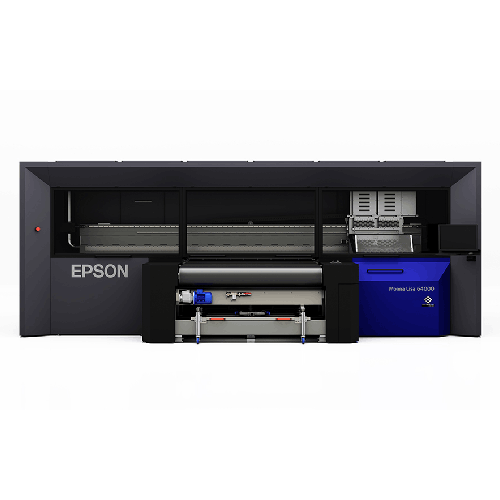
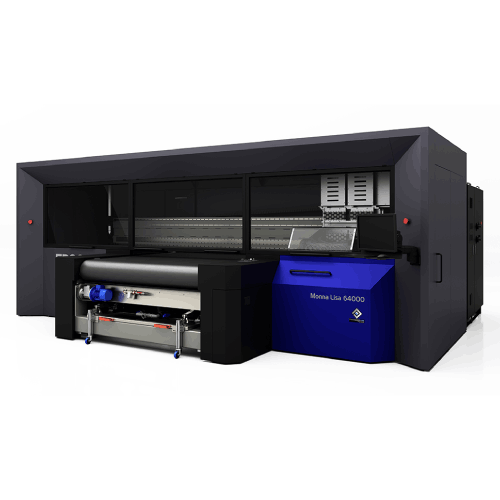
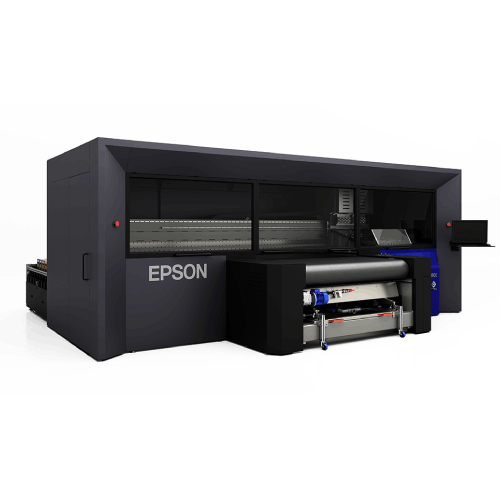
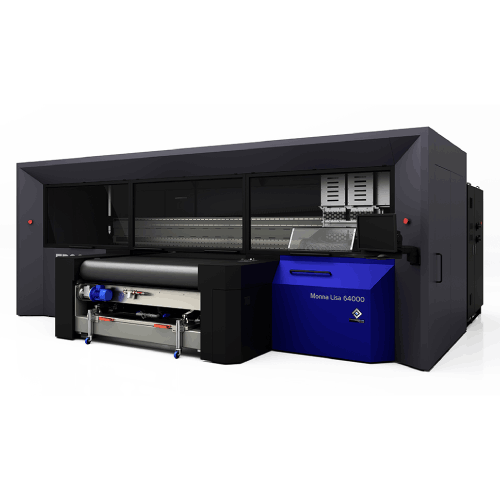
Epson Monna Lisa ML-64000 Direct-to-Fabric Large Format Printer
Regular Price:৳0.00Availability: SKU: 1.8.8.9086
Quick Overview
-
Support
Saturday – Thursday: 09 AM - 06 PM. -
Payment
Cash on Delivery | Card | Online Payment -
Shipping Cost
Inside Dhaka 200tk | Outside Dhaka 350tk -
Warranty Policy
Read More
Description
Epson Monna Lisa ML-64000 Direct-to-Fabric Large Format Printer in Bangladesh
The Epson Monna Lisa ML-64000 Direct-to-Fabric Large Format Printer is part of Epson’s flagship Monna Lisa textile printing family, created for industrial textile mills and export-oriented garment manufacturers. It is engineered to bring high-speed, high-quality digital printing directly onto fabric, reducing dependence on rotary screens and traditional methods while enabling flexible, on-demand production.
Bangladesh is one of the world’s largest producers of ready-made garments (RMG), knitwear, woven fabrics, and home textiles. Buyers in Europe, North America, and other regions are demanding:
- Shorter lead times
- More designs and colourways
- Higher design complexity
- Lower minimum order quantities (MOQs)
- Better environmental performance and less waste
The Monna Lisa ML‑64000 is designed to support this shift by offering:
- Industrial print speeds suitable for production lines
- Direct-to-fabric printing, integrated into textile finishing flows
- Epson’s advanced heads and ink systems (reactive, acid, disperse, or pigment variants depending on global spec; confirm locally)
- High-quality output for fashion, sportswear, scarves, saree-type fabrics, and home textiles
For large mills in Narayanganj, Gazipur, Savar, Tongi, Chattogram, and Comilla EPZ areas, this printer represents a true step into industrial digital textile printing rather than sampling-only solutions.
Direct-to-Fabric Digital Printing – From Design File to Finished Fabric
Unlike sublimation on paper transfer or traditional rotary screen printing, the Monna Lisa ML‑64000 is built for direct printing on fabric (D2F). In a typical workflow (exact steps depend on chemistry and fabric), the process includes:
- Fabric pre-treatment suitable for the chosen ink type (e.g., reactive for cotton, etc.).
- Direct printing onto the fabric roll using the ML‑64000.
- Post-print processes such as steaming, washing, and finishing, integrated within your existing textile finishing line.
Benefits for Bangladeshi mills:
- Eliminate or reduce screen making (engraving, storage, washing).
- Support smaller, more frequent orders and design changes.
- Print complex, multi-colour designs without limitations of screens.
- Reduce chemical and water usage associated with rotary screen processes (application-dependent).
This direct-to-fabric approach aligns with the Bangladesh textile industry’s need to move toward more flexible, eco-conscious manufacturing while maintaining high productivity.
High Productivity for Industrial-Scale Operations
The “ML‑64000” designation reflects an industrial‑scale capacity. While exact speeds and head counts must be taken from Epson’s official specification, this class of device is intended for:
- Continuous operation in mill environments.
- Long production runs with high uptime.
- Integration with fabric handling systems suitable for wide fabric widths.
Bangladeshi textile exporters facing tight shipment windows can use a high-capacity digital line like ML‑64000 to:
- Turn around urgent orders and design repeats quickly.
- Move part of their recurring patterns to digital for improved agility.
- Handle shorter lead-time requests from international buyers that are unrealistic for screen preparation cycles.
Advanced Printhead Technology for Fine Detail and Smooth Gradients
Epson is known for its PrecisionCore inkjet head technology. In a Monna Lisa platform, multiple industrial heads are configured to deliver:
- High-resolution printing suitable for fine textile details.
- Smooth gradations, enabling photographic or highly detailed fashion designs.
- Accurate reproduction of complex motifs popular in sarees, women’s wear, and export prints.
For Bangladeshi mills that currently rely on rotary screens for prints:
- Digital printing opens up new design possibilities, including photo-like effects, high-frequency repeats, gradients, and complex colour blends.
- Designers can work more freely in Adobe Photoshop or other CAD systems knowing that the printer can reproduce the details accurately.
Flexible Ink Chemistry Options (Region/Configuration Dependent)
Globally, the Monna Lisa family can be configured with different ink chemistries tailored to target fabrics:
- Reactive inks – Typically for cellulosic fibres like cotton, viscose, rayon, linen.
- Acid inks – For silk, wool, and some nylons (e.g., swimwear, scarves).
- Disperse/sublimation inks – For polyester and blends (sportswear, athleisure).
- Pigment inks – For versatile printing on mixed fibres, with simplified post-processing (exact technology per Epson spec).
The exact configuration of the ML‑64000 available for Bangladesh must be confirmed with Epson/BME, but the principle is that:
- You choose ink type(s) based on your dominant fabric portfolio (cotton/reactive, polyester/disperse, etc.).
- You integrate the printer with pre-treatment and post-treatment systems appropriate to that chemistry.
This enables mills to target:
- Fashion and fast fashion – Cotton and viscose prints, all-over designs.
- Sportswear and athleisure – Polyester prints, performance fabrics.
- Scarves, hijabs, and stoles – Lightweight, high-value printed fabrics.
- Home textiles – Curtains, bedsheets, cushion covers, table linens (depending on fabric and finishing).
Colour Accuracy and Repeatability for Brand and Buyer Confidence
International buyers and global brands expect:
- Consistent colour from sample to bulk.
- Reliable matching to Pantone, fashion palettes, and brand colours.
- Repeatability across different lots and time periods.
The Monna Lisa ML‑64000, used within a colour‑managed workflow, helps provide:
- Stable, reproducible colour, once profiles and production parameters are set.
- Less dependency on manual shade matching and re-engraving of screens.
- Easier scaling of designs across multiple orders and seasons.
For Bangladeshi mills and garment exporters:
- Digital production using Monna Lisa can reduce disputes on shade variation.
- You can offer more accurate strike-offs and re-production without screen deviation.
- This builds stronger trust with European and US buyers who audit colour consistency.
Supports Fast Fashion, On-Demand and Capsule Collections
The global fashion industry is moving toward:
- Shorter fashion cycles and micro-seasons.
- Limited-run capsule collections for specific markets or events.
- On-demand production to minimise inventory and unsold stock.
The ML‑64000’s digital nature supports:
- Rapid sampling and short-run production before scaling or without ever using screens.
- Printing different designs and colourways back-to-back without plate/screen changes.
- Fast replenishment of best-selling items without waiting for screen re-preparation.
For Bangladeshi exporters working with fast fashion brands:
- Digital lines can be dedicated to complex, frequent-change designs.
- Rotary screens can remain focused on high-volume, stable orders, improving their ROI.
- Factories can respond to replenishment calls more flexibly.
Enabling Sustainable, Lower-Waste Production (Process-Dependent)
Digital direct-to-fabric, particularly when part of an optimised line, can help reduce:
- Water consumption compared to conventional printing with many screens (depending on chemistry and workflow).
- Chemical waste from repeated screen washing and preparation.
- Fabric waste due to more accurate testing and shorter lead-in lengths.
Sustainability is a rising priority for:
- European buyers under ESG and due diligence rules.
- Global brands with sustainability targets.
- Local factories managing effluent treatment and compliance.
While exact environmental performance depends on ink choice, pre-/post-treatment, and process control, an ML‑64000 line can be a central component of a more sustainable textile strategy.
Integration into Existing Mill Workflows
A Monna Lisa ML‑64000 installation is not a small desktop printer; it is a production line investment that integrates with:
- Fabric preparation (pre-treatment lines).
- Fabric feeding/unwinding and tension control systems.
- Post-print fixation (steamer, dryer/curing, washing lines) depending on chemistry.
- Quality control (inspection) and finishing (stenter, compactor, etc.).
For large Bangladeshi mills:
- The ML‑64000 is typically placed in or near existing finishing departments.
- Your process engineers and BME/Epson must coordinate on layout, workflow, and utilities (power, steam, water, ventilation, etc.).
- Digital production is planned alongside conventional dyeing/printing as part of your overall capacity plan.
✅ Key Features
- Industrial Direct-to-Fabric Digital Printer – Built for continuous textile production in mill environments.
- Large Format, High Throughput – Designed for wide fabric rolls and industrial production speeds (exact figures per Epson spec).
- Advanced Epson Printhead Technology – Multi-head configuration for high-resolution, fine detail, and smooth gradients.
- Flexible Ink Chemistry Options (Per Configuration) – Reactive, acid, disperse, or pigment inksets depending on target fabrics (confirm actual available configuration).
- Colour-Managed, Repeatable Output – Supports consistent colour reproduction for fashion and home textile buyers.
- Integration Ready – Designed to work with pre-treatment, post-treatment, and finishing systems in textile mills.
- Suitable for Fashion, Sportswear, Scarves, and Home Textiles – Depending on chosen ink and fabric types.
✅ Usage / Applications
- Export-Oriented Garment and Textile Mills – Printing fabric for international fashion brands.
- Home Textile Manufacturers – Bedsheets, curtains, cushions, table linens, and other decor textiles (fabric-dependent).
- Scarf, Hijab, and Shawl Producers – High-value printed pieces for domestic and export markets.
- Sportswear and Performance Fabric Manufacturers – Polyester and blends, depending on ink chemistry.
- Design-Driven Fast Fashion Vendors – Rapid turnover designs and capsule collections.
- Printing Houses Attached to Knit & Woven Factories – Vertical integrated setups in Savar, Gazipur, Narayanganj, Chattogram.
✅ Benefits of This Product?
- Industrial-Level Productivity with Digital Flexibility – Handles real production volumes while allowing rapid design changes.
- Reduced Screen Dependency – Save time and cost on engraving, storing, and washing large numbers of screens.
- Shorter Lead Times for Buyers – Support fast fashion and replenishment with quick turnaround.
- Higher Design Freedom – Complex multi-colour designs, photo-like prints, and intricate motifs.
- Potential Sustainability Gains – Depending on chemistry and workflow, can help reduce water and chemical waste compared to purely rotary-based setups.
- Better Colour Consistency and Repeatability – Simplifies reorders and shade management for export buyers.
- Stronger Buyer Relationships – Ability to say “yes” to complex and time-sensitive orders that pure conventional lines struggle with.
✅ Ideal For
- Large textile printing and finishing mills serving international garment buyers.
- Vertically integrated RMG groups that want in-house digital printing capacity.
- Home textile exporters targeting Europe, the Middle East, and North America.
- Factories in Narayanganj, Gazipur, Savar, Tongi, Chattogram, and EPZ zones modernising their printing capability.
- Groups upgrading from small digital sampling machines to true production-capable digital lines.
✅ Why Choose the Epson Monna Lisa ML-64000 Direct-to-Fabric Large Format Printer?
- Flagship-Level Textile Platform – Part of Epson’s top-tier Monna Lisa series used in industrial mills worldwide.
- True Production Capability – Not just for sampling; designed for continuous, industrial throughput.
- Supports Bangladesh’s Shift to Higher-Value, Faster Fashion – Aligns with global buyer trends.
- Flexible Inks and Fabrics (Per Configuration) – Choose the chemistry that matches your dominant product lines.
- Backed by a Global Brand in Textile Printing – Epson has a strong presence in textile inkjet technology globally.
✅ Why Buy This Product from BME?
- Genuine Epson Monna Lisa Equipment for Bangladesh – BME works with authentic, region-appropriate units and configurations.
- Industrial Project Consultation – Assistance with feasibility, ROI analysis, and integration planning for mills and large factories.
- Coordination of Installation & Commissioning – Working alongside Epson engineers and your technical team.
- Local Warranty & Service Coordination – BME manages warranty and liaises with authorised technical support under Epson’s policies.
- Experience with Enterprise & Industrial Clients – BME already supplies banks, NGOs, corporates, and can operate at project scale.
- Structured Proposals for Management and Financing – Detailed quotations, layouts (from Epson), and technical documents for board approval and bank loans.
- Support for Multi-Site Textile Groups – Suitable partner for groups with mills in multiple regions of Bangladesh.
✅ Buying Guide
1. Analyse Your Product Mix and Buyer Requirements
- Identify the fabrics and end products you primarily produce: cotton fashion, polyester sportswear, scarves, home textiles, etc.
- Discuss with your major buyers their expectations on lead time, design complexity, lot size, and sustainability.
2. Determine the Right Ink Chemistry
- Based on fabric composition, decide whether reactive, acid, disperse, or pigment inks are most appropriate.
- Consult Epson/BME and your chemical suppliers to align pre-treatment and finishing processes.
3. Assess Your Existing Infrastructure
- Check if you already have pre-treatment, steaming, washing, and finishing lines that can integrate with digital.
- Evaluate space, power, steam, water, compressed air, and environmental controls in the intended installation area.
4. Estimate Throughput Needs
- Calculate the daily/weekly production capacity you expect from the digital line.
- Match this to the ML‑64000’s capabilities (using Epson’s official spec and guidance) to ensure alignment.
5. Plan Integration with Current Rotary/Screen Printing
- Decide which designs/runs will move to digital (e.g., high complex, low run, frequently changing designs).
- Maintain or adjust your rotary/screen capacity for very long, stable orders.
6. Model Total Cost of Ownership (TCO) and ROI
- Work with BME to look at: ink cost, energy, maintenance, pre-/post-treatment, fabric yield, and labour.
- Compare with screen printing costs, including screens, chemicals, water, reworks, and inventory risk.
7. Consider Human Resources & Training
- Identify operators and engineers to be trained on digital printing, colour management, and maintenance.
- Plan for cross-functional cooperation between design, production planning, and finishing.
8. Confirm Warranty, Service, and Long-Term Support
- Ask BME about warranty period, spare parts availability, and service SLAs.
- Discuss options for extended maintenance contracts and periodic performance checks.
9. Request a Detailed Project Proposal from BME
- Obtain a formal quotation, including configuration, ink chemistry, installation scope, and estimated timeline.
- Request, where possible, sample prints on your target fabrics and references of Monna Lisa deployments in comparable markets.
✅ Customers Ask About / Frequently Asked Questions
Q1: Is the Epson Monna Lisa ML-64000 suitable for full production, not just sampling?
Answer: Yes. The ML‑64000 is designed as a full production, industrial-capacity direct-to-fabric printer, capable of continuous operation, not just sampling. It targets mills and integrated factories needing real throughput.
Q2: Which fabrics can I print with the ML-64000?
Answer: It depends on the ink configuration you choose (reactive for cotton/viscose, acid for silk/wool, disperse for polyester, pigment for broad applications). With proper pre-/post-treatment, you can print a wide range of textiles. Confirm exact capabilities with Epson/BME.
Q3: Can this printer replace rotary screen printing in my mill?
Answer: It is more realistic to see it as a complement to rotary/screen. Digital is ideal for complex, short and mid runs, and fast fashion, while rotary may still be used for very long, stable designs. Many mills run both technologies side by side.
Q4: How will digital affect my cost per metre compared to rotary?
Answer: For shorter runs, many designs, and frequent changes, digital often improves total economics by eliminating screens and reducing waste. For very long runs of a few designs, rotary may still have lower cost per metre. Each mill needs a detailed analysis with BME.
Q5: Is special pre-treatment mandatory?
Answer: Yes. For best results, fabrics usually need ink-specific pre-treatment (e.g., for reactive inks) and appropriate post-treatment (steaming, washing, etc.). These processes can often use existing finishing equipment, with adjustments.
Q6: Does the ML-64000 support colour management and profiling?
Answer: Yes. Monna Lisa systems are intended for ICC-based colour management and integration with textile CAD and RIP solutions, enabling consistent colour reproduction.
Q7: How long does installation and ramp-up typically take?
Answer: It depends on site readiness and complexity. A typical project includes delivery, mechanical/electrical installation, integration tests, calibration, and operator training, which can take several weeks. BME will propose a specific timeline.
Q8: Can this help me meet sustainability expectations from European buyers?
Answer: Digital direct-to-fabric can support more sustainable practices by reducing screen-related chemicals and water, and enabling on-demand production. Actual environmental performance must be evaluated holistically with your ETP and process control.
Q9: What about maintenance requirements?
Answer: Industrial digital printers require regular maintenance and monitoring of heads, ink systems, and fabric paths. BME, together with Epson, will train your technical team and outline preventive maintenance schedules.
Q10: Does BME support financing discussions or techno-commercial evaluations?
Answer: BME can provide detailed proposals, technical data, and cost models that you may use with your banks or financial partners, as well as support techno‑commercial evaluations with your management.
✅ Why Buy This Product
- Brings true industrial digital textile printing into your Bangladeshi mill or integrated factory.
- Supports fast-fashion and design-intensive orders that are challenging for rotary-only setups.
- Enhances your flexibility, responsiveness, and sustainability story for global buyers.
- Helps you move up the value chain from commodity prints to high-value, design-driven textiles.
- Backed by Epson’s Monna Lisa platform and BME’s local project support, making it a strategically sound long-term investment.
What is the price of Epson Monna Lisa ML-64000 Direct-to-Fabric Large Format Printer in Bangladesh?
Write a review
Question Answer
Have question about this product? Get specific details about this product from expert.




Epson SureColor SC-T5430 Large Format Printer


