

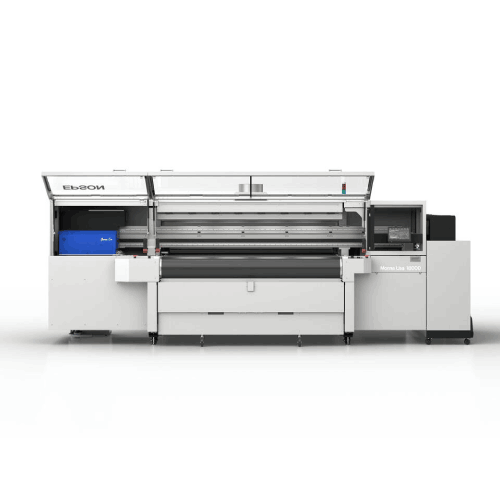
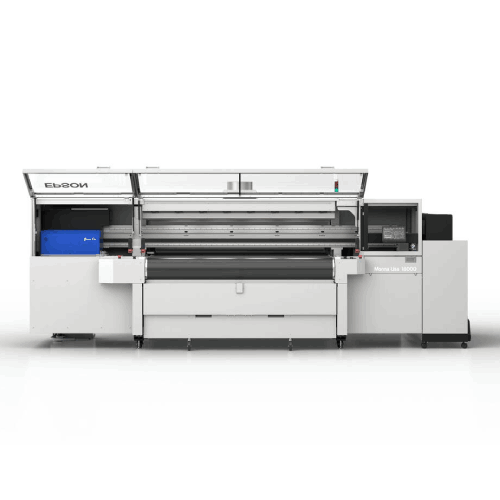
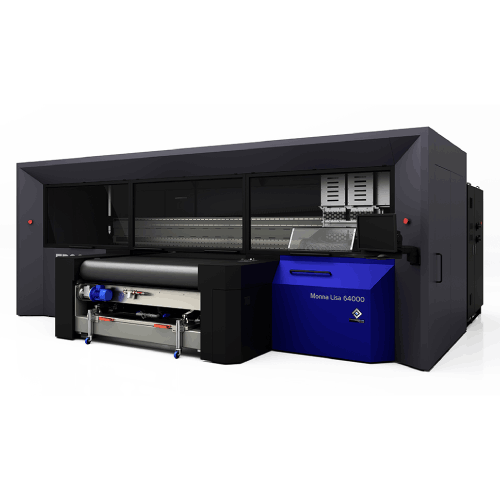
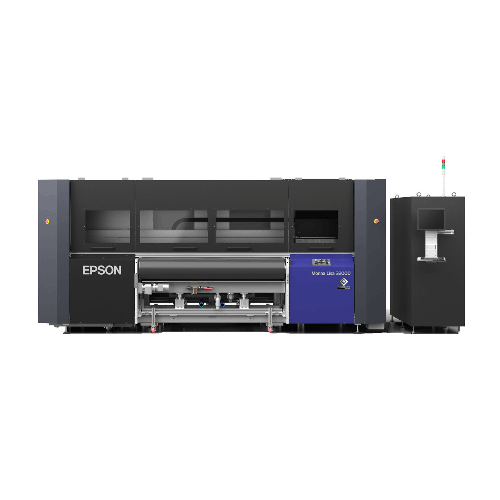
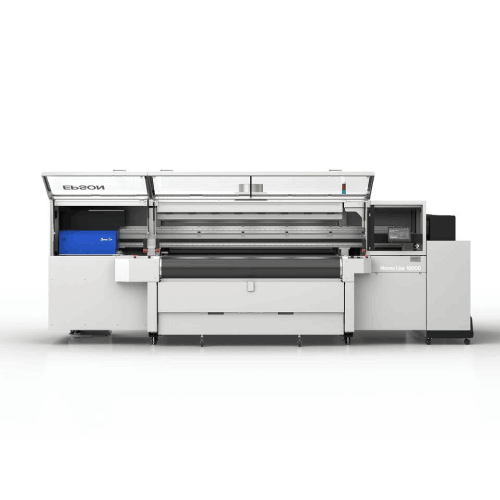
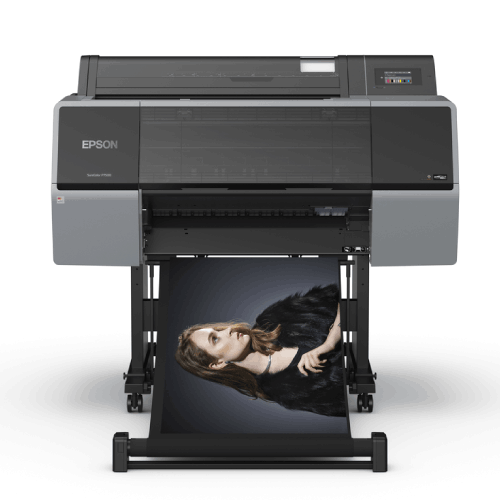
Epson Monna Lisa ML-18000 Direct to Fabric Large Format Printer
Regular Price:৳0.00Availability: SKU: 1.8.8.9088
Quick Overview
-
Support
Saturday – Thursday: 09 AM - 06 PM. -
Payment
Cash on Delivery | Card | Online Payment -
Shipping Cost
Inside Dhaka 200tk | Outside Dhaka 350tk -
Warranty Policy
Read More
Description
Epson Monna Lisa ML-18000 Direct to Fabric Large Format Printer in Bangladesh
The Epson Monna Lisa ML-18000 Direct to Fabric Large Format Printer is part of Epson’s renowned Monna Lisa industrial textile printing platform, engineered for mills, composite factories, and export-oriented garment units that need consistent, high-quality digital printing directly onto fabric. For Bangladesh’s rapidly evolving RMG and textile sector in Dhaka, Narayanganj, Gazipur, Savar, Narsingdi, Chattogram and EPZ zones, this printer offers a modern alternative to traditional rotary or flatbed screen printing.
The ML-18000 is built as a heavy-duty, roll-to-roll direct to fabric system, designed to integrate into demanding 24/7 production environments. It can be configured with different industrial ink sets (such as reactive, acid, disperse or pigment, depending on model configuration) to suit a wide variety of fabrics including cotton, viscose, silk, polyester and blends, subject to proper pre- and post-treatment. This flexibility makes it ideal for fashion apparel, sportswear, ladies’ dresses, scarves, sarees, hijabs, lungis, children’s wear, home textiles, bedding, upholstery fabrics and soft signage.
Thanks to Epson’s advanced inkjet head technology and precision fabric transport, the Monna Lisa ML-18000 delivers fine details, smooth gradients and rich colours that meet the expectations of European, US and Japanese buyers. Designers can freely experiment with short runs, frequent colorway changes and highly detailed artwork without the constraints and costs of screens and engraving. That is especially valuable for Bangladeshi factories working with fast-fashion brands, online retailers and customized collections.
The ML-18000 is designed around automation, repeatability and reduced waste. Digital printing allows you to produce only what you need, when you need it, reducing excess inventory and sample waste. Compared to conventional printing, it can help cut water, energy and chemical use when the full digital workflow is properly implemented. This aligns with the sustainability requirements being pushed by large international buyers and certification standards in Bangladesh.
For textile companies in Bangladesh planning to transition from sampling-level digital machines to a full industrial digital textile line, the Epson Monna Lisa ML-18000, supplied and supported by BME, offers a stable, scalable and brand-trusted platform. BME can assist with installation, operator training, colour management setup, workflow integration with CAD systems, and ongoing after-sales service, ensuring your investment turns into real production capacity.
✅ Key Features
-
Direct-to-Fabric Industrial Printing Platform
Designed specifically for direct printing onto fabric rolls, eliminating the need for transfer paper and enabling an efficient inline production flow. -
Advanced Epson Inkjet Head Technology
Utilises Epson’s state-of-the-art industrial inkjet heads for high precision droplet placement, excellent detail, and smooth tonal transitions on textiles. -
Compatible with Multiple Textile Ink Types
Depending on configuration, supports suitable reactive, acid, disperse or pigment textile inks (to be confirmed with BME and official specs), making it adaptable for different fabric types common in Bangladesh. -
High-Quality Colour Reproduction
Delivers vivid colours, sharp lines and fine text, supporting complex fashion prints, intricate ethnic patterns, geometric designs and photographic artworks. -
Robust Industrial Build for 24/7 Use
Engineered for heavy-duty, continuous operation in large mills and export factories, with sturdy mechanics and industrial-grade components. -
Roll-to-Roll Fabric Handling System
Equipped with a fabric feeding and take-up system designed to maintain tension and alignment, supporting stable printing on a wide spectrum of woven and certain knitted fabrics. -
Integrated Workflow with Textile Pre/Post Processes
Designed to work alongside pre-treatment, steaming/fixation and washing units, creating a complete digital textile printing line for serious production. -
Colour Management and RIP Compatibility
Works with professional RIP and colour management software for accurate colour matching, ICC-based workflows and brand colour consistency.
✅ Usage / Applications
-
Ready-Made Garment Printing
Ideal for printing fashion fabric used in shirts, dresses, tops, tunics, abayas, leggings, kidswear and loungewear for both local and export brands. -
Ladies’ Fashion, Sarees and Scarves
Perfect for premium saree, scarf, dupatta, hijab, shawl and stole production with rich, detailed designs popular in Dhaka, Chattogram and Sylhet markets. -
Home Textiles and Interior Fabrics
Suitable for bed linens, duvet covers, cushion covers, curtains, sofa and upholstery fabrics, table linens and hotel textiles, supporting Bangladeshi home textile exporters. -
Sportswear and Athleisure
When paired with appropriate inks and fabrics, supports performance sportswear, jerseys, yoga wear and athleisure for international and local brands. -
Soft Signage and Display Fabric
Used for fabric-based banners, exhibition graphics, flags, lightbox fabrics and retail displays, especially for eco-focused brands. -
Sampling, Strike-Offs and Short Production Runs
Supports fast sampling for buyers’ approvals, strike-offs and small to medium production runs, reducing the time and cost of using rotary screens. -
Custom and On-Demand Fabric Printing
Enables Bangladeshi businesses to explore on-demand fashion, online custom orders and limited-edition collections without large inventory risk.
✅ Benefits of This Product?
-
Reduced Setup and Design Change Costs
No need for screen engraving; short runs and frequent design changes become economically viable, a crucial advantage for fast fashion and seasonal collections. -
Improved Time-to-Market
Digital workflow significantly reduces design-to-production time, allowing Bangladeshi factories to respond quickly to buyer demands and trend changes. -
Enhanced Print Quality for High-Value Orders
Fine detail reproduction and colour accuracy support premium price garments and home textiles, raising your value proposition to overseas buyers. -
Flexibility Across Fabric Types
With suitable inks and finishing, you can print on cotton, viscose, silk, polyester and blends commonly used in Bangladesh, consolidating more work on one platform (subject to configuration). -
Sustainability and Resource Savings Potential
Digital printing can help lower water, chemical and energy use compared to conventional methods when the end-to-end process is optimised, supporting environmental compliance. -
Better Inventory and Sample Control
Print only what you need, when you need it. This reduces overproduction, dead stock and sample waste, making your operations leaner. -
Stronger Buyer Confidence
International brands recognise Epson Monna Lisa as a reputable industrial digital textile solution, helping Bangladeshi suppliers meet strict quality and consistency expectations.
✅ Ideal For
-
Large and Medium Textile Mills
Composite and fabric mills in Narayanganj, Narsingdi, Gazipur, Savar, Bhaluka, Chattogram and EPZ areas focusing on export-oriented production. -
Garment Manufacturers and Buying Houses
RMG factories working for European, US, UK, Japanese and Middle Eastern brands that demand high-quality printed fabrics and quick turnaround. -
Home Textile Exporters
Companies producing bedding, curtains, cushions and furnishings for international retailers looking for fashionable, customized designs. -
Fashion Brands and Design Studios
Large local brands and design houses looking to own in-house digital fabric production for fast experiments and capsule collections. -
Printing Service Bureaus / Textile Converters
Service providers offering printed fabric to small and mid-sized brands who do not have their own printing unit. -
Factories Upgrading from Entry-Level DTG/Small Textile Printers
Businesses that have proven demand and are ready to step into industrial-scale digital textile production.
✅ Why Choose the Epson Monna Lisa ML-18000?
-
Part of a Proven Industrial Platform
The Monna Lisa series has a strong global reputation for industrial textile production; the ML-18000 benefits from this mature technology base. -
Precision and Consistency You Can Trust
Epson’s integrated approach—printhead, ink and control systems—gives stable colour and quality run after run, crucial for long yardages. -
Scalable Digital Strategy
With the ML-18000, you can start with your current volumes and expand as demand grows, adding more Monna Lisa units or complementary finishing equipment later. -
Optimised for Real Production, Not Just Sampling
Unlike many small digital textile printers, the ML-18000 is designed as a true production machine, ready for multi-shift use in Bangladeshi factory conditions. -
Support for Compliance and Certifications
Epson’s textile inks (depending on configuration) are typically developed with global textile standards and safety requirements in mind, helping you align with buyer and certification needs (exact certifications should be confirmed with BME/Epson). -
Better Total Cost of Ownership Over Time
While the initial investment is significant, efficient ink usage, reduced setup cost and the ability to command higher-margin orders can give a strong long-term ROI when properly utilised.
✅ Why Buy This Product from BME?
-
Authorised and Trusted Supplier in Bangladesh
BME is a recognised provider of industrial printing and business machines in Bangladesh, experienced in deploying high-value equipment in factories and large institutions. -
End-to-End Project Consultation
From site readiness, power and environment checks, to integration with your existing pre-treatment, finishing and ERP systems, BME supports the project at every stage. -
Professional Installation and Training
BME coordinates installation, calibration and operator training, ensuring your team is comfortable with the ML-18000’s workflow and maintenance routines. -
After-Sales Service and Genuine Consumables
Access to trained technicians, genuine Epson inks and approved parts in Bangladesh, reducing downtime and protecting your investment. -
Local Support for Colour Management & Workflow
Assistance with RIP software, colour profiling and production workflows, tailored to your specific fabric types and buyer requirements. -
Corporate Procurement and Finance Support
BME can assist with quotation documentation, LC processes, corporate approvals and framework agreements, making it easier for large groups to procure the machine.
✅ Buying Guide
-
1. Define Your Product Mix and Fabrics
Identify what you will mainly produce: fashion fabric, sportswear, home textile, scarves, sarees or a mix, and list the primary fibre contents (cotton, viscose, silk, polyester, blends). This will drive your ink and configuration choice. -
2. Choose Ink Type and Finishing Workflow
Depending on target fabrics and buyers’ requirements, select the right ink technology (reactive, acid, disperse or pigment, etc.) in consultation with BME and Epson guidelines. Ensure you have or plan for pre-treatment, steaming/fixation and washing or appropriate curing systems. -
3. Assess Production Volume and Shifts
Estimate monthly yardage and production shifts. This will help decide whether the ML-18000 alone is sufficient or needs to be paired with additional units or complementary machines to match buyer demand. -
4. Prepare Infrastructure and Environment
Ensure you have suitable space, power, humidity control and exhaust/ventilation as required. BME can guide on layout planning and environmental conditions recommended for stable operation. -
5. Plan for Colour Management and Design Workflow
Integrate the ML-18000 with your CAD/design department, pattern teams and buyers’ colour standards. Implement proper RIP software and ICC-based colour management from the start. -
6. Budget for Ink, Fabric Pre-Treatment and Maintenance
Beyond the printer price, consider ongoing ink costs, pre-treatment chemicals, fabric preparation and routine maintenance. BME can help you calculate an estimated cost per metre for your use cases. -
7. Train Your Team and Set SOPs
Assign dedicated operators, colour specialists and maintenance personnel. Develop standard operating procedures for print file preparation, daily checks, head cleaning, and quality inspections. -
8. Validate with Buyers and Run Pilot Orders
Before full-scale rollout, produce test lots and pilot orders for your key buyers, collect feedback, and fine-tune colour and fabric handling to align with their expectations.
✅ Customers Ask About / Frequently Asked Questions
Q1: What types of fabrics can the Epson Monna Lisa ML-18000 print on?
A: The ML-18000 is designed for direct printing on textile fabrics such as cotton, viscose, silk, polyester and blends, depending on the chosen ink configuration and proper pre/post-treatment. BME will help you select the suitable setup for your main fabric types.
Q2: Is the ML-18000 suitable for high-volume export production in Bangladesh?
A: Yes. The ML-18000 is part of Epson’s industrial Monna Lisa platform, intended for serious production environments such as composite mills and large garment units serving export buyers.
Q3: Can this printer handle both sampling and bulk orders?
A: It is well-suited to both sampling/strike-offs and bulk production. You can print small runs for buyer approvals and then move directly into continuous yardage production with the same device.
Q4: What additional equipment do I need besides the printer?
A: For most textile ink configurations you will need fabric pre-treatment, fixation/steaming or curing units, and washing/finishing lines. The exact setup depends on your chosen inks and fabrics; BME can advise during project planning.
Q5: What are the exact print speed and resolution of the ML-18000?
A: Specific numerical details such as print speed, resolution and head configuration should be confirmed from official Epson documentation or directly with BME, as these can depend on the particular ML-18000 configuration.
Q6: How does digital printing with the ML-18000 support sustainability goals?
A: Digital textile printing can help reduce water, chemical, sample and inventory waste compared to traditional methods when used in an optimised process, supporting compliance with increasingly strict buyer sustainability requirements.
Q7: Who will provide support and service in Bangladesh?
A: BME provides local installation, training, after-sales service and supply of genuine Epson consumables for customers across Dhaka, Chattogram, Narayanganj, Gazipur, Savar, Sylhet and other industrial zones.
✅ Why Buy This Product
- Industrial-grade solution for serious textile manufacturers looking to upgrade from conventional printing or entry-level digital.
- Brand-recognised Epson Monna Lisa platform, strengthening your credibility with global buyers.
- Flexible fabric and ink options to match the diversity of Bangladesh’s textile industry.
- Better design freedom and shorter lead times, crucial for fast fashion and customized collections.
- Potential resource savings and sustainability benefits when integrated into an optimised digital workflow.
- Backed by BME’s local expertise and service, ensuring your investment is supported long-term.
What is the price of Epson Monna Lisa ML-18000 Direct to Fabric Large Format Printer in Bangladesh?
Write a review
Question Answer
Have question about this product? Get specific details about this product from expert.




Epson SureColor SC-T5430 Large Format Printer


