

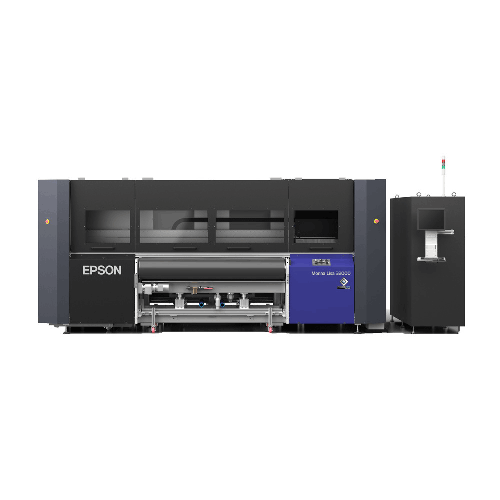
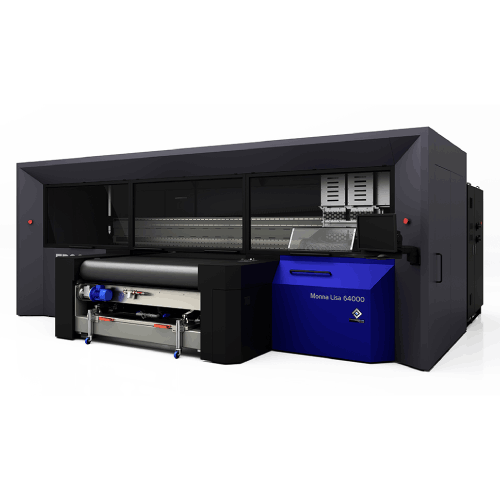
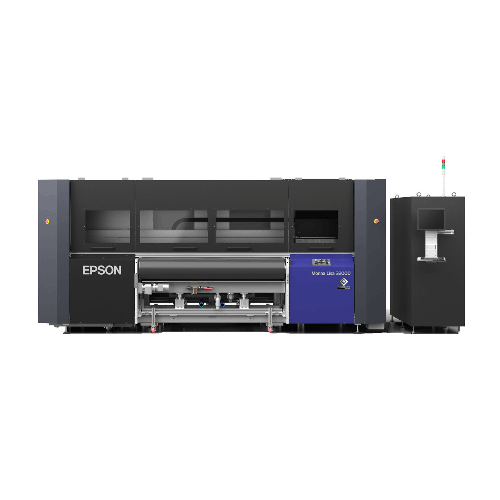
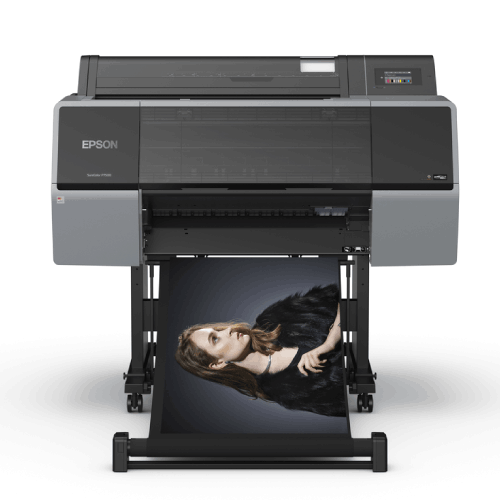
Epson Monna Lisa ML-32000 Direct to Fabric Large Format Printer
Regular Price:৳0.00Availability: SKU: 1.8.8.9087
Quick Overview
-
Support
Saturday – Thursday: 09 AM - 06 PM. -
Payment
Cash on Delivery | Card | Online Payment -
Shipping Cost
Inside Dhaka 200tk | Outside Dhaka 350tk -
Warranty Policy
Read More
Description
Epson Monna Lisa ML-32000 Direct to Fabric Large Format Printer in Bangladesh
The Epson Monna Lisa ML-32000 Direct to Fabric Large Format Printer is part of Epson’s Monna Lisa industrial textile series, recognised globally in mills and print houses that have moved from traditional rotary/screen printing towards high-volume digital printing. It is engineered for real production—continuous shifts, wide fabric rolls, and demanding export buyers—not just for sampling.
Bangladesh is a global leader in ready-made garments (RMG), knitwear, woven fabrics, scarves, and home textiles. Buyers in Europe, North America, the UK, and other markets now expect:
- Shorter lead times
- More SKUs and colourways
- Frequent design changes
- Better colour consistency
- Stronger sustainability performance
The Monna Lisa ML-32000 addresses these expectations by offering:
- Industrial print throughput suitable for mill‑scale operations
- Direct‑to‑fabric printing integrated with textile finishing
- Advanced Epson inkjet heads for fine detail and smooth tone
- Configurable textile ink chemistries (reactive, acid, disperse, pigment – based on final configuration)
For mills and integrated factories in Narayanganj, Gazipur, Savar, Tongi, Chattogram, Cumilla EPZ, and other industrial clusters, this printer provides a practical way to add serious digital capacity within existing pre‑treatment and finishing lines.
Direct-to-Fabric Workflow – From CAD Design to Finished Cloth
Unlike sublimation transfer or basic desktop solutions, the ML-32000 is designed for direct-to-fabric (D2F) production. A typical workflow (exact steps depend on ink type and your line design) includes:
- Fabric pre-treatment – Applying a suitable coating for the selected ink chemistry (e.g., reactive pre‑treatment for cotton/viscose).
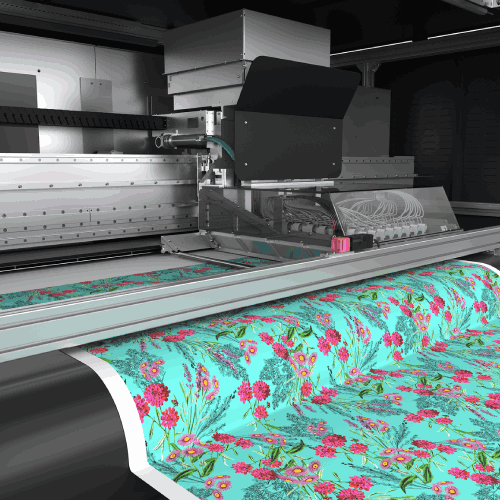
- Digital printing – The Monna Lisa ML-32000 prints the design directly on continuous fabric rolls with high registration accuracy.
- Post-print processes – Steaming, washing, soaping, drying, and finishing (for reactive/acid/disperse), or appropriate curing/fixation for pigment inks.
This approach enables Bangladeshi mills to:
- Eliminate screen engraving, storage, and reclaiming for digital jobs.
- Produce shorter runs and frequent pattern changes without heavy setup overhead.
- Print complex, multi-colour, gradient, and photographic designs that are difficult or costly on rotary screens.
The ML-32000 thus becomes a natural part of a vertical textile line, sitting between pre-treatment and finishing.
Industrial Capacity – Real Production, Not Just Sampling
The ML-32000 is built for mills that measure output in thousands of metres per day, not just a few sample panels. While precise speeds and head counts must be taken from Epson’s official specification, machines in this class are designed for:
- Multi-shift operation in humid, textile-factory conditions.
- Continuous roll-to-roll printing with minimal operator intervention.
- Compatibility with high-speed unwinding and rewinding systems.
For Bangladeshi exporters:
- You can use the ML-32000 to run production orders, not only sample swatches.
- Replenishment runs and repeat designs can be turned around quickly.
- You can shift complex, frequent-change orders off rotary, freeing your screens for volume basics.
Epson Printhead Technology – Fine Detail and Smooth Gradients
Epson’s industrial inkjet heads are at the core of the Monna Lisa family. In an ML-32000 configuration, multiple heads are aligned to deliver:
- High-resolution printing good enough for delicate textile motifs.
- Smooth tonal gradations, enabling photo-like prints and fashionable gradient effects.
- Sharp edges and clean lines for checks, geometrics, borders, and typography.
For Bangladesh’s product mix, this supports:
- Fashion prints on cotton and viscose for women’s and men’s wear.
- Sarees, three‑piece sets, panjabi/kameez fabrics with detailed borders and motifs.
- Scarves/hijabs/stoles with rich optical effects for local and export markets.
- Home textiles such as bedsheets, curtains, cushions, and decorative fabrics.
Designers in Dhaka, Narayanganj, or Chattogram can work more freely, knowing the printer will reproduce subtle textures, tonal shifts, and fine outlines.
Flexible Ink Chemistry Options (Configuration-Dependent)
Monna Lisa machines, including the ML‑series, can be ordered with different ink chemistries depending on market and factory needs (exact combinations and availability for ML-32000 in Bangladesh must be confirmed with Epson/BME):
- Reactive inks – Typically used for cotton, viscose, modal, linen, and other cellulosic fibres common in Bangladesh.
- Acid inks – For silk, wool, and some nylons (e.g., scarves, luxury garments).
- Disperse / direct disperse inks – For polyester and blends (sportswear, athleisure, fashion polyester).
- Pigment inks – For versatile printing on mixed fibre content, with potentially simpler post-processing (subject to your finishing capability).
Each chemistry has specific pre‑ and post‑treatment requirements, but choosing the correct configuration lets you focus on:
- Fashion garments (reactive on cotton/viscose).
- Sportswear/athleisure (disperse on polyester).
- Scarves and luxury items (acid or reactive depending on base).
- Home textile programmes spanning multiple fibre types.
BME and Epson can help align the ML-32000 specification with your current dyeing/finishing infrastructure and buyer portfolio.
Colour Management and Repeatability for Export Buyers
Global buyers and brand offices focus heavily on:
- Shade consistency between sample and bulk.
- Repeat orders months later with matching colours.
- Tight tolerances on key brand/palette shades.
The ML‑32000, used with proper ICC profiling, textile RIP software, and controlled process parameters, supports:
- Consistent reproduction of approved colourways on repeat batches.
- Faster adjustment and calibration than manual screen-based shade matching.
- Easier extension of a design into new colour variants with predictable results.
For Bangladeshi mills and composite factories:
- Digital colour management reduces reworks and claims related to colour.
- You can provide digital strike-offs and then confidently run bulk on the same machine.
- This strengthens your technical credibility during buyer audits.
Fast Fashion, Capsule Collections, and On-Demand Runs
Fashion sourcing is shifting towards:
- Shorter buys, multiple drops, and test programs.
- Special capsules for regions, events, or online campaigns.
- Quick reorders based on sales data.
The ML‑32000 makes these models more practical because you can:
- Run small and mid-size batches economically, without screen costs.
- Change designs frequently without long waiting times for screen departments.
- Reprint a best-seller with the same settings and colour profile.
Bangladeshi factories using digital in combination with rotary can:
- Offer higher flexibility to fast-fashion buyers.
- Use rotary for high-volume, season-long prints.
- Use digital for high-design complexity and fashion-forward items.
Potential Sustainability Advantages (Process-Dependent)
Compared to purely rotary-based operations, digital direct-to-fabric can support:
- Lower water usage related to screen preparation and washing (exact savings depend on chemistry and process management).
- Reduced chemical consumption and waste for screens and pastes used only in analog printing.
- Less overproduction and dead stock through on-demand and short-run capabilities.
For mills managing ETP plants, ZDHC commitments, and buyer audits, implementing an ML‑32000 can be part of a sustainability strategy, alongside:
- Efficient pre-/post‑treatment recipes.
- Optimised steaming/washing processes.
- Robust effluent and sludge management.
Integration into Mill Workflow
The ML‑32000 will be integrated into your existing or planned finishing lines, typically connected with:
- Pre‑treatment lines (padding/mangle, drying).
- Fabric feeding/tension control units.
- Steamer, washing range, and dryer or relevant fixation units.
- Stenter/compactor and inspection systems.
Planning an ML‑32000 project in Bangladesh involves:
- Coordination between production, engineering, maintenance, ETP, and BME/Epson.
- Layout design to ensure a smooth path from grey/bleached fabric to finished, printed goods.
- Consideration of utility requirements (power, compressed air, steam, water, HVAC).
✅ Key Features
- Industrial Direct-to-Fabric Printer – Designed for continuous roll-to-roll textile production.
- High-Throughput, High-Resolution Output – Balances speed and print quality for export-grade fabrics (exact metrics per Epson spec).
- Advanced Multi-Head Inkjet System – Multiple industrial printheads deliver fine detail and smooth gradients.
- Configurable Textile Ink Chemistries – Reactive, acid, disperse, or pigment inks available depending on configuration (confirm with BME/Epson).
- Colour-Managed Workflow Compatibility – Works with ICC profiles and textile RIP software for consistent results.
- Integration with Pre- and Post-Treatment – Intended to sit alongside pre-treatment, steaming/washing, and finishing lines.
- Suitable for Fashion, Sportswear, Scarves, and Home Textiles – Depending on selected ink and fabric combinations.
✅ Usage / Applications
- RMG and Composite Factories – Printing yardage for garments exported to Europe, USA, UK, and global retailers.
- Textile Printing & Finishing Mills – Service for buying houses and fashion brands.
- Home Textile Producers – Curtains, bedsheets, cushion covers, table linens (fabric-dependent).
- Scarf, Hijab, and Dupatta Manufacturers – High design complexity prints for local and export markets.
- Sportswear and Athleisure Producers – Polyester and blends (when configured with appropriate inks).
- Vertical Groups – Weaving/knitting + dyeing + finishing + garmenting, adding digital printing capacity.
✅ Benefits of This Product?
- Industrial Digital Capacity – Moves digital printing from sampling to true production scale.
- Reduced Screen Overhead – Lowers cost and lead time on complex, high-mix designs.
- Improved Agility – Respond faster to buyers’ design changes and replenishment needs.
- Enhanced Design Possibilities – Print multi-colour, photo-realistic motifs and fine geometrics.
- Potential Water and Chemical Savings – Less screen-related process overhead (subject to full process design).
- Better Colour Consistency – Easier to maintain shade consistency for export buyers over time.
- Competitive Edge – Puts Bangladeshi mills on par with digitally equipped mills in Turkey, China, India, and elsewhere.
✅ Ideal For
- Large textile mills and finishing plants in Narayanganj, Gazipur, Savar, Tongi, Chattogram, Cumilla, etc.
- Vertically integrated RMG groups targeting high-value and fast fashion programmes.
- Home textile factories supplying major global retailers and e-commerce brands.
- Groups upgrading from lab/sampling digital printers to production-class digital.
- Factories seeking to reduce reliance on rotary for complex, shorter-run designs.
✅ Why Choose the Epson Monna Lisa ML-32000 Direct to Fabric Large Format Printer?
- Part of the Monna Lisa family – A globally recognised platform for industrial textile digital printing.
- True production-class design – Built for mills that need continuous output with high reliability.
- Supports Bangladesh’s shift to higher-value, fast and flexible textile exports.
- Future-ready investment – As digital share of printing grows, an ML‑32000 line can remain a core asset for many years.
- Backed by Epson technology and BME’s local industrial-project support.
✅ Why Buy This Product from BME?
- Official Epson Monna Lisa Supplier Context – BME works through authorised channels with region-appropriate configurations.
- Industrial Consultation – Help in assessing feasibility, plant layout implications, and ROI.
- Coordinated Installation & Commissioning – BME liaises with Epson engineers and your technical team for rollout.
- Local Warranty & Service Coordination – Support for warranty procedures, parts sourcing, and service visits according to manufacturer policy.
- Experience with Large Projects & Institutions – BME understands structured corporate and factory procurement.
- Comprehensive Proposals – Quotation, technical overviews, and basic layout/utility guidance to support management and bank decisions.
- Support for Multi-Location Textile Groups – Capable of planning phased deployments across several mills.
✅ Buying Guide
1. Define Your Fabric and Product Focus
- List key fabrics (cotton, viscose, polyester, silk, blends) and products (fashion, home textile, scarves, sportswear).
- Match these to potential ink chemistries (reactive, acid, disperse, pigment) with advice from BME/Epson and your chemical suppliers.
2. Estimate Target Digital Volume
- Calculate how many metres per day/week you aim to shift from rotary to digital over the next 3–5 years.
- Focus especially on complex, multi-colour, shorter-run styles that currently create bottlenecks.
3. Review Existing Infrastructure
- Check space, power, steam, water, ETP and finishing capacity around your printing/finishing sections.
- Identify what can be reused and where upgrades are needed (pre‑treatment, steamer/wash, curing).
4. Plan a Hybrid Production Strategy
- Decide which designs remain on rotary (very long, simple repeats) and which will go digital (complex, fast fashion styles).
- Develop internal guidelines for merchandising and planning to allocate jobs properly.
5. Build a Cost and ROI Model
- Work with BME to model ink and chemical consumption, energy, labour, and maintenance for ML‑32000 production.
- Compare this against full rotary costs (screens, pastes, water, setup fabric, reprints, inventory risk).
6. Organise Human Resources and Training
- Select an operations and maintenance core team for digital printing and colour management.
- Include CAD/design and merchandising in training so they understand digital constraints and opportunities.
7. Clarify Warranty, Service, and Long-Term Support
- Ask BME about warranty duration, coverage, spares availability, and service SLAs.
- Explore options for annual maintenance contracts or extended service plans.
8. Request a Detailed Project Proposal from BME
- Get a formal quotation covering configuration, ink types, installation scope, training, and provisional timeline.
- Request, where possible, sample prints on your actual fabrics or references of comparable installations.
✅ Customers Ask About / Frequently Asked Questions
Q1: Is the Epson Monna Lisa ML-32000 suitable for full production or only for sampling?
Answer: It is a full production, industrial-capacity printer designed for continuous use in textile mills, not just for sampling. It is meant to handle real daily output requirements.
Q2: Which fabrics can I print on with the ML-32000?
Answer: This depends on the ink configuration you select (reactive for cotton/viscose, disperse for polyester, acid for silk/wool, pigment for multi-fibre applications). With correct pre-/post‑treatment, you can print on a wide range of textiles.
Q3: Can the ML-32000 replace my rotary printing machines?
Answer: In practice, it will complement rotary/screen lines. Digital is ideal for complex, high-mix, shorter-run jobs and fast fashion; rotary remains efficient for very long, stable designs.
Q4: How does cost per metre of digital compare to rotary printing?
Answer: For shorter runs and complex designs, digital can be more economical overall when you factor in screens, setup fabric, and inventory risk. For very large, stable runs, rotary may remain cheaper. A detailed cost analysis is recommended with BME.
Q5: Do I need special pre-treatment and finishing for digital printing?
Answer: Yes. For best results, fabrics need ink-specific pre-treatment and appropriate fixation/steaming/washing or curing. Many mills can adapt or slightly modify existing lines to support digital processes.
Q6: Is colour management complicated?
Answer: It requires structured setup and training, but once calibrated, workflows and profiles make production and reorders more consistent. BME/Epson can support you in implementing a professional colour-managed workflow.
Q7: How long does installation and ramp-up typically take?
Answer: It depends on site readiness and configuration. Expect several weeks for installation, integration with fabric handling and finishing, calibration, and operator training. BME will share a project plan with estimated timelines.
Q8: Will this help meet buyers’ sustainability and innovation expectations?
Answer: Yes. Digital can reduce screen-related water and chemical use and enable on-demand production, while supporting more innovative design work. Paired with a strong ETP and process, this strengthens your ESG story to buyers.
Q9: What are the maintenance requirements?
Answer: Industrial digital printers need regular preventive maintenance, monitoring of heads and ink systems, fabric path cleaning, and adherence to operating procedures. BME/Epson will define maintenance schedules and train your staff.
Q10: Can BME help build a techno-commercial and financing case?
Answer: Yes. BME can provide technical data, output assumptions, and cost models to support internal justification and bank/financial partner discussions.
✅ Why Buy This Product
- Introduces industrial-scale digital printing into your Bangladesh textile facility, supporting fast fashion and design‑driven orders.
- Reduces reliance on rotary for complex, lower- to mid-volume jobs, lowering screens and setup overhead.
- Aligns your mill with global trends in flexibility, speed, design complexity, and sustainability.
- Provides a scalable platform as digital printing’s share of your production grows.
- Backed by Epson’s Monna Lisa technology and BME’s local industrial project support, making it a sound long-term strategic investment.
What is the price of Epson Monna Lisa ML-32000 Direct to Fabric Large Format Printer in Bangladesh?
Write a review
Question Answer
Have question about this product? Get specific details about this product from expert.




Epson SureColor SC-T5430 Large Format Printer


