


Seagate Exos X18 16TB SATA III 3.5" NAS HDD
Regular Price:৳89,000.00Availability: SKU: 9.63.86.9398
Quick Overview
-
Support
Saturday – Thursday: 09 AM - 06 PM. -
Payment
Cash on Delivery | Card | Online Payment -
Shipping Cost
Inside Dhaka 100tk | Outside Dhaka 150tk -
Warranty Policy
Read More
Description
Seagate Exos X18 16TB SATA III 3.5" NAS HDD in Bangladesh
The Seagate Exos X18 16TB SATA III 3.5" NAS HDD is designed for one job: to store a massive amount of data in environments where uptime and consistency really matter. It’s an enterprise/NAS-class 3.5-inch hard disk, built on Seagate’s Exos line for datacentres and large NAS systems rather than casual desktop use. For businesses and advanced home labs in Bangladesh that need serious capacity—backups, archives, CCTV footage, virtualisation storage, file servers—the Exos X18 series is a workhorse.
At 16TB per drive, you can hold an extraordinary amount of data in a single bay. Whether you’re running a multi-bay Synology or QNAP NAS, a TrueNAS box at the office, a storage server for a SaaS startup, or an NVR recording multi-megapixel cameras, the Seagate Exos X18 16TB SATA III 3.5" NAS HDD allows you to scale capacity with fewer disks. That means less rack space, less power consumption and fewer potential mechanical points of failure compared to using many smaller HDDs.
This is not the kind of drive you drop into a casual home PC and forget about. It’s meant for 24/7 operation in RAID arrays, NAS enclosures, and storage servers where disks work all day, every day.
Enterprise-Grade NAS HDD vs Desktop Drive – Why It Matters in Bangladesh
It’s tempting to look at capacity and price only and buy a normal desktop HDD. But the Seagate Exos X18 16TB is very different from a typical consumer drive:
24/7 Duty Cycle: Exos drives are rated for continuous operation, not “8 hours a day, 5 days a week.”
Workload Rating: Enterprise drives are built to handle far higher annual workloads (read/writes) than desktop drives over their lifetime.
Vibration & Multi-Bay Tolerance: They are tuned to cope with the vibration that occurs when many drives spin and seek side by side in a NAS or rack server.
Error Recovery & RAID Behaviour: Firmware is optimised to work with RAID controllers and NAS OSes, preventing a single drive from hanging the entire array.
In a Bangladeshi environment, where:
A NAS in the office might be handling file serving, backups, CCTV and VM storage all at once,
Data centres in Dhaka, Chattogram or Sylhet might run high-density storage nodes in one rack,
Power interruptions and heat require drives that stay stable under less-than-ideal conditions,
using a drive that’s built to shoulder that load makes a significant difference. The Seagate Exos X18 16TB SATA III 3.5" NAS HDD is built exactly for those contexts.
16TB of Capacity – Built for Big Data, Backups and Media
16 terabytes per disk means:
A 4-bay NAS with four Exos X18 drives can offer well over 40TB of usable capacity in RAID 5/6 after overhead,
An 8-bay rack NAS or TrueNAS box can become a true data warehouse—for backups, file shares, ISOs, footage and more,
A CCTV NVR can store weeks to months of recordings for many high-resolution cameras.
Example Bangladesh scenarios:
SME file and backup server: A small company uses a 4–8 bay NAS loaded with Exos X18 16TB drives as the main storage for documents, media and system backups. They keep daily, weekly and monthly backup versions without worrying about running out of space.
Media & production house: Editing teams in Dhaka store years of project files, raw footage and archives on a central NAS. 16TB drives allow them to keep more of this data online instead of on scattered external disks.
Surveillance archiving: A factory or campus in Gazipur runs dozens of 1080p/4K IP cameras. With several 16TB Exos X18 drives, they can meet strict retention time requirements, keeping video accessible for investigations or compliance.
The high density is also important for growth: you can start with fewer drives and still have substantial capacity, then add more Exos X18 drives as your needs grow.
SATA III (6Gbps) – Compatible and Fast Enough for HDD Workloads
The SATA III (6Gbps) interface is widely supported:
On NAS appliances (Synology, QNAP, Asustor, TerraMaster, TrueNAS appliances, etc.),
On standard server motherboards and RAID controllers,
In many DIY storage builds.
For mechanical HDDs, 6Gbps provides more than enough link speed; the limiting factor is the drive’s own mechanics, not the interface.
Practically, this means:
You don’t need special controllers or adapters to use the Exos X18 16TB in most modern NAS/servers,
It fits directly into standard 3.5" SATA bays, hot-swap trays and backplanes,
Performance scales well in multi-drive arrays: more disks, more aggregate bandwidth and IOPS.
For Bangladeshi IT teams, this offers a straightforward upgrade path: if your NAS or storage server accepts 3.5" SATA drives, the Exos X18 is likely a plug‑in choice (with firmware and capacity compatibility checks).
7,200 RPM – Balanced Performance for Mixed NAS Workloads
While your product name mentions SATA III and NAS usage but not RPM explicitly, Exos X18 drives are generally 7,200 RPM enterprise HDDs (always verify with the official Seagate datasheet for exact details). A 7.2K RPM profile offers:
Faster sequential throughput than 5.4K RPM units,
Better random read/write response times,
Improved performance for mixed workloads (many small files with some large ones).
For typical networks in Bangladesh:
A 1GbE or 2.5GbE NAS connection can easily be saturated by an array of 7.2K Exos drives,
10GbE configurations benefit from the higher throughput available from multiple spindles working together,
Backup jobs, media streaming, and disk-intensive tasks (like VM snapshots) all complete faster and more predictably.
Users experience:
Shorter waits for large file copies,
Less lag when multiple employees access shared resources at once,
Reduced time for backup windows, especially overnight.
NAS, RAID and 24/7 Datacenter Operation
The Seagate Exos X18 16TB SATA III 3.5" NAS HDD is intended for:
24/7 duty cycles,
Multi-drive environments where dozens of disks may be spinning at once,
RAID configurations where drives must behave correctly with controllers and firmware.
If you’re running:
A RAID 5/6/10 array in a Synology/QNAP NAS,
a ZFS pool in TrueNAS or similar systems,
a Linux mdadm RAID or LVM setup in a storage server,
this class of drive is more likely to:
Provide stable performance during RAID rebuilds (which are heavy IO operations),
Recover from errors using enterprise-appropriate timeouts (so one failing drive doesn’t hang the entire array),
Maintain data integrity with robust error detection and correction.
For Bangladesh businesses where NAS/RAID boxes store primary and backup data, this matters. The wrong drive type can cause arrays to degrade or rebuild more often than they should.
Real Deployment Examples in Bangladesh
1. NAS for a Design/Architectural Firm in Dhaka
A firm uses a Synology or QNAP 8-bay NAS with 6 x Seagate Exos X18 16TB drives in RAID 6:
All customer drawings, 3D models, Revit/AutoCAD files and render outputs live on this system,
Multiple architects and designers access files over 2.5GbE or 10GbE from their workstations,
Exos drives ensure decent throughput so saving large files doesn’t stall the team.
2. University or College Storage Node
A campus in Bangladesh hosts:
Research datasets, student assignments, learning materials, and lab VMs backed by a storage server full of Exos X18 drives,
Data is mirrored between two storage nodes for redundancy across buildings,
The 16TB drives allow them to keep years of academic data online.
3. CCTV Storage for a Residential Complex or Factory
A security integrator sets up an NVR with multiple Exos X18 16TB drives:
Each drive handles continuous sequential writes from dozens of 1080p or 4K cameras,
Retention windows for recorded footage are long—weeks or months,
When incidents occur, operators can scrub through large volumes of video quickly without drives choking under random access.
4. Backup and DR Repository
A mid-sized enterprise uses an Exos X18-based NAS as:
A primary backup target for on-site Veeam/Commvault/Active Backup jobs,
A replication source for an offsite DR NAS in another Bangladeshi city,
Having 16TB per disk means they can implement Grandfather-Father-Son (GFS) rotation patterns and keep many recovery points.
Maintenance & Care for Enterprise HDDs
To keep Seagate Exos X18 16TB drives healthy:
Monitor SMART attributes via your NAS OS (DSM, QTS, TrueNAS, etc.) or server tools:
Reallocated sectors,
Pending sectors,
Temperature,
Power-on hours and error counts.
Ensure server or NAS is:
In a cool, dust-managed environment,
Protected by a UPS to reduce shock from sudden power loss.
Use proper RAID/redundancy rather than relying on a single drive:
RAID 5/6/10 or ZFS equivalents to protect from disk failures.
Replace drives that show early signs of failure proactively before they force emergency rebuilds.
Proactive management is especially important in Bangladesh, where heat and power fluctuations add to the normal stress that datacenter equipment already endures.
✅ Key Features
16TB Enterprise Capacity: Massive storage space per drive for NAS, servers and backup repositories.
SATA III (6Gbps) Interface: Broadly compatible with NAS appliances, servers and storage enclosures.
Enterprise/NAS-Class Design: Built for 24/7 operation, high annual workloads and multi-drive RAID arrays.
7,200 RPM Performance Profile: Balanced speed suitable for mixed workloads—files, backups, media and VMs.
Optimised for RAID & NAS: Firmware tuned for use with NAS OS and enterprise RAID controllers.
High Density per Bay: Allows large capacities in fewer bays, reducing rack and power requirements.
✅ Usage / Applications
High-capacity NAS storage for SMEs and enterprises in Bangladesh.
Backup and archive volumes for servers and virtual machines.
CCTV/NVR systems capturing and retaining large volumes of surveillance footage.
File and media servers for creative, design, education and research organisations.
Object storage and archival nodes in private clouds or on-prem S3-compatible setups.
Mixed-use departmental NAS for file sharing, snapshots and local DR.
✅ Benefits of This Product?
Enables large-scale storage with fewer drives and simpler management.
Improves performance and consistency compared to non-NAS consumer drives under 24/7 load.
Supports a broad range of NAS and server platforms, thanks to SATA III and 3.5" form factor.
Reduces operational complexity, letting you focus on managing data and services rather than dealing with frequent disk issues.
Future-proofs your storage, making it easier to handle data growth over the coming years without constantly reconfiguring arrays.
✅ Ideal For
The Seagate Exos X18 16TB SATA III 3.5" NAS HDD is ideal for:
IT departments in Bangladesh managing Synology/QNAP/TrueNAS deployments for file services, backup and DR,
Security integrators building large surveillance solutions that demand long retention windows and stable disk performance,
Service providers & MSPs hosting client backups, hosting platforms, or delivering IaaS/PaaS services,
Data-heavy industries—media houses, research labs, universities—that work with large, growing datasets,
Advanced home lab and prosumer NAS users who want datacenter-grade drives for ZFS or unRAID setups instead of risky desktop HDDs.
If the phrase “16TB drive running 24/7” describes something central to your business, this is the kind of disk you should be evaluating.
✅ Why Choose the Seagate Exos X18 16TB SATA III 3.5" NAS HDD?
The Exos brand is Seagate’s line for datacentres and large-scale storage. By choosing the Exos X18 16TB, you’re opting for:
A drive capacity and design aimed squarely at NAS and server workloads,
Mechanical and firmware engineering that acknowledges RAID, 24/7 operation and vibration conditions,
A path to consolidate storage and reduce operational issues compared to using consumer drives beyond their comfort zone.
Compared to lower-end HDDs:
You gain more predictable performance,
Stronger resilience under load,
Greater confidence when arrays rebuild or resync.
In the Bangladesh market, where replacing or recovering from drive-related issues can be slow and disruptive, that reliability is worth a premium.
✅ Why Buy This Product from BME?
Buying the Seagate Exos X18 16TB SATA III 3.5" NAS HDD from Business Machine & Equipment (BME) gives you:
Assurance of genuine, datacenter-grade stock, avoiding second-hand, refurbished or grey-import drives of uncertain history,
Local insight into which NAS or server platforms Exos X18 drives pair well with in typical Bangladeshi deployments,
Enterprise procurement support: quotations, documentation and project-level delivery for integrators, ISPs, enterprises and government clients,
Access to post-sale product guidance, including capacity planning tips, basic RAID design considerations and NAS/OS-level monitoring practices.
Rather than buying “a 16TB drive” in isolation, you’re partnering with a supplier that understands the bigger storage picture.
✅ Buying Guide
Before purchasing Seagate Exos X18 16TB drives:
1. Check NAS/Server Compatibility
Verify your NAS or server model’s official compatibility list for 16TB drives and Exos series where available,
Confirm bay count, PSU capacity and controller support.
2. Define Capacity vs Redundancy
Decide on:
RAID 5/6/10 or ZFS/RAIDZ equivalents,
Number of drives and usable capacity targets,
Hot spare strategy if relevant.
3. Consider Workload Type
For heavy random IO (VM or DB), consider mixing SSD and HDD tiers,
For backups and archives, sequential performance and capacity may be enough.
4. Environmental Factors
Plan for adequate cooling and airflow in your rack or NAS location,
Use a UPS and, for larger deployments, generator backup to avoid uncontrolled shutdowns.
5. Backup and DR Strategy
Even with Exos drives, keep:
External or offsite backup copies,
DR plans that include drive failure scenarios.
6. Budget and Roadmap
Purchase initial drives with an eye on future expansions; ensure your controller and chassis can support more Exos drives as data grows.
✅ Customers Ask About / Frequently Asked Questions
Q1: Can I use Seagate Exos X18 16TB drives in a Synology or QNAP NAS?
Yes, many Synology/QNAP models support Exos drives, but you must confirm compatibility on the vendor’s list for your specific NAS model and firmware version.
Q2: Are these drives suitable for 24/7 operation?
Yes. Exos X18 drives are enterprise/NAS-class HDDs designed for continuous, 24/7 operation under heavy workloads.
Q3: Can I mix Exos X18 16TB with smaller drives in the same array?
Technically, yes, but not recommended. RAID arrays will default to the smallest drive size, and performance/behaviour can be uneven. Better to keep arrays homogeneous.
Q4: Are they noisy compared to desktop drives?
Exos 7.2K drives can be louder due to higher RPM and enterprise mechanics. In a dedicated server room, this isn’t an issue; in a quiet office, NAS noise may be noticeable.
Q5: Do I need a special controller to use these drives?
Any standard SATA III-capable NAS backplane or server HBA/RAID card should work, given compatibility and proper power/cooling. Always check official docs.
Q6: Is there a warranty when buying through BME?
Yes. Warranty terms follow Seagate’s and BME’s local agreements. Confirm exact duration and coverage at purchase.
Q7: Will one Exos X18 16TB drive be enough for my backup?
That depends on the total data size and growth expectations. BME can help you think through sizing, but your IT strategy will dictate final drive counts.
Q8: Are these drives appropriate for a home PC?
They can work, but are overkill, more expensive and louder than consumer drives for home PCs. They’re best in NAS and server roles.
✅ Why Buy This Product
The Seagate Exos X18 16TB SATA III 3.5" NAS HDD is a serious drive for serious storage needs. It offers huge capacity per bay, enterprise-grade reliability, and behaviour tuned for RAID and NAS operation—all critical attributes for modern businesses and advanced home labs in Bangladesh.
Instead of stretching consumer drives beyond their intended purpose and hoping for the best, you can base your storage strategy on a drive line created for heavy-duty environments.
What is the price of Seagate Exos X18 16TB SATA III 3.5" NAS HDD in Bangladesh?
Write a review
Question Answer
Have question about this product? Get specific details about this product from expert.


Dell EMC MZ-ILT3T8A 3.84TB 12Gbps SAS SSD
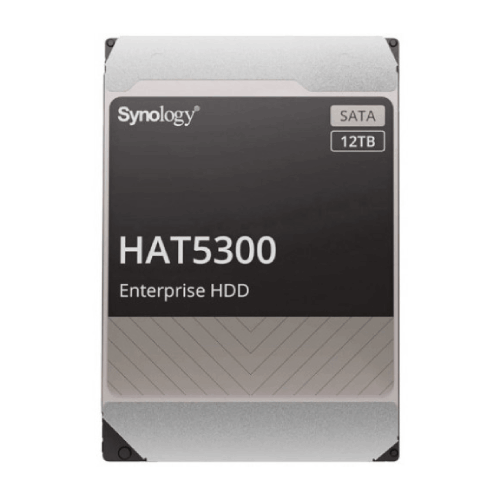
Synology HAT5300 12TB 7.2K RPM 3.5" SATA HDD

Seagate Exos X18 16TB SATA III 3.5" NAS HDD
Seagate Exos X18 16TB SATA III 3.5" NAS HDD
Dell EMC MZ-ILT3T8A 3.84TB 12Gbps SAS SSD

Seagate 10TB Exos SAS HDD
Seagate Exos X18 16TB SATA III 3.5" NAS HDD


Seagate Barracuda 8TB 3.5 Inch Desktop HDD


